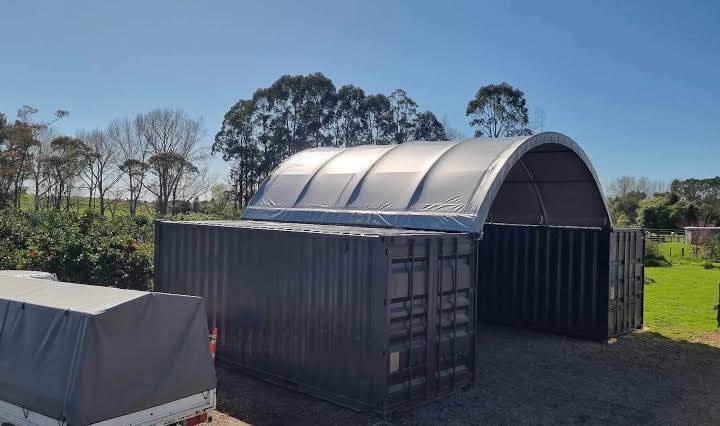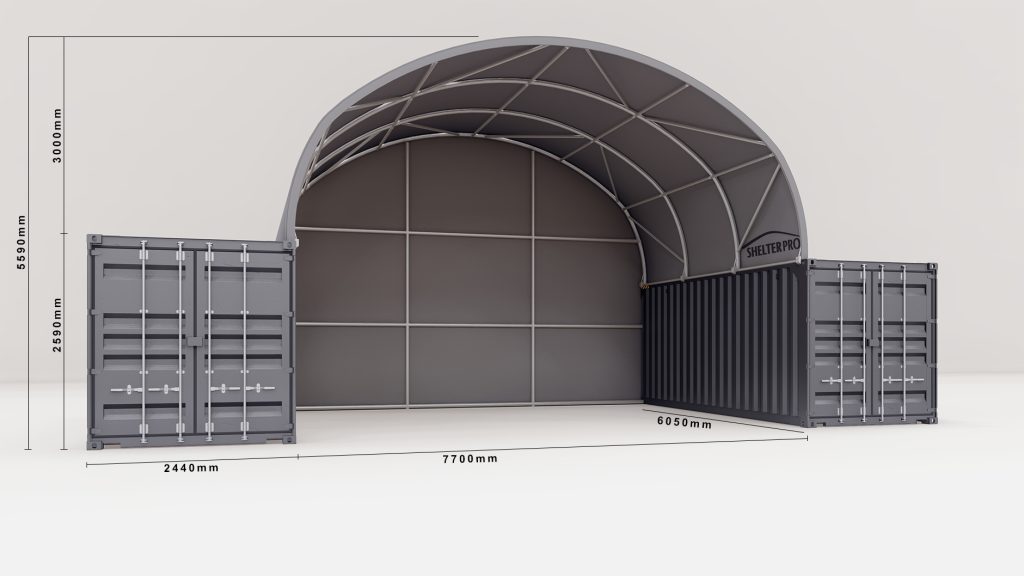
New Zealand weather has a way of making decisions for you. One decent southerly, one week of relentless rain, and suddenly the question of whether your container shelter setup is doing a complete job becomes very real, very fast. For most businesses, farms, and work sites running a container shelter, the covered roof span takes care of the bulk of the problem. But there is a point, depending on what you are storing and how your operation works, where open ends start working against you rather than for you.
Here at ShelterPro, we supply heavy-duty container shelters to businesses, contractors, farmers, and industrial operators right across New Zealand, and the question of whether to add front wall panels and a door system is one of the most common things we help people think through. The answer is never one-size-fits-all, so let us break it down properly.
Open Ends Are Not Always a Problem
It’s worth saying upfront that a container shelter without enclosed ends is a genuinely effective solution for a wide range of commercial applications, and there is no point in adding an enclosure just for the sake of it.
Aggregate yards, landscape supply businesses, and bulk material operations are a good example. When you are covering topsoil, sand, bark, gravel, or fertiliser and you have loaders and machinery moving in and out throughout the working day, keeping the ends open is the practical choice. The shelter earns its keep by keeping the rainfall off the stockpile, and unrestricted drive-through access means the operation keeps moving without obstruction. Closing things up would create more problems than it solves in that kind of environment.
The same logic applies to covered staff areas on construction and civil sites, temporary workshop setups where ventilation is important, and any situation where large machinery or vehicles need to pass through freely. In those cases, the shelter does exactly what it is supposed to do with open ends, and adding panels would get in the way.
You can get a better sense of how different industries use our shelter setups by browsing through our shelter applications page, which covers everything from farming and contracting to remote worksite operations.
When Enclosure Starts to Make Business Sense
There are certain situations where leaving the ends open stops being the right call, and the cost of not enclosing the shelter starts to show up in real and tangible ways.
Security on commercial and work sites is probably the most clear-cut reason to look at a full front wall and door system. A container shelter with open ends gives anyone passing by a clear view of what is stored inside, and easy access on top of that. For contracting businesses leaving plant, tools, or equipment on a long-running job site overnight, that is an exposure that adds up quickly. A fully enclosed shelter, particularly when paired with the lockable shipping containers that anchor the structure, creates a much more credible security setup. It is not a vault, but it is enough of a deterrent to make opportunistic theft considerably less likely.
Weather exposure on open sites is the other major driver. Construction sites, farm properties, coastal locations, and rural operations often sit on land that catches wind from multiple directions, and in those conditions, rain does not just fall from above. It gets driven hard and horizontally straight through the open ends of the shelter. For anyone storing machinery, timber, electrical equipment, hay, stock feed, or any material that really cannot take sustained moisture exposure, the difference between open ends and enclosed front wall panels is the difference between being protected and gradually damaged. That is a cost that compounds quietly until it becomes impossible to ignore.
Workshop and operational environments are a third situation where enclosure makes a significant difference. Businesses using a container shelter as a covered workspace, whether for mechanical work, manufacturing, spray finishing, or any trade activity, find that enclosed ends make the space far more functional. Temperature is easier to manage, dust and debris stay out, and the workspace feels more like a proper facility rather than an open-sided canopy. For anyone doing work that requires any level of environmental control, this matters more than people often expect upfront.
Understanding the Two Main Options: Half Panels and Full Wall Systems
When it comes to the actual container shelter wall and door systems we carry, there are two distinct approaches, and they are designed to address different operational needs.
Half-wall panels close off the arch of the shelter from approximately mid-height upward. This blocks the worst of the wind-driven rain coming in at an angle while keeping the lower opening clear for vehicle and machinery access. Any equipment or vehicle that sits below the height of the shipping containers can still pass through without issue, which makes half panels a particularly popular choice for farming operations, aggregate businesses, and any setup where wheeled or tracked equipment is going in and out regularly. You get meaningful weather protection without sacrificing access, which is often exactly the balance a working operation needs.
Full wall and door systems completely enclose the front face of the shelter, with a built-in lift-up door that gives you controlled access when you need it and a fully sealed setup when you do not. This is the option that makes the most sense when security is a genuine priority, when the internal environment of the shelter needs to be managed, or when the shelter is functioning as a proper storage facility or workshop. The door operates cleanly and gives you the best of both worlds: locked up and secure after hours, fully open and operational during the working day.
We stock half panels and full wall and door combinations across all shelter widths in our range, from 6m through to 12m, so regardless of which model you are running, there is a matching enclosure option ready to go. Have a look at our walls and doors range to find what fits your shelter.
How This Plays Out Across Different Industries
Thinking through specific industries makes the decision considerably clearer, because the right choice comes into sharp focus once you picture your own operation.
Farming and agricultural operations storing hay, silage wrap, stock feed, fertiliser, or farm chemicals almost always benefit from at least a half-panel setup. These are materials where sustained moisture exposure, even indirect rain entry during a heavy blow, causes real and costly damage over time. A full wall with a door adds the further benefit of locking up chemical storage and high-value equipment, which matters on larger farming operations where multiple people and vehicles are moving around the property.
Contracting and civil construction businesses running long-term site storage for tools, plant, and materials get the most value out of a full enclosure. Being able to lock the shelter at the end of each shift removes a significant ongoing risk, and on longer projects, the cumulative value of that security is substantial. For shorter-term or more transient site shelter use, open or half-panel options are generally sufficient.
Landscape supply and aggregate yards typically find that open or half-panel setups work best because the priority is throughput and machine access rather than enclosure. The shelter’s primary job is keeping bulk materials dry, and it handles that well without needing to be fully sealed.
Warehousing and overflow stock storage for businesses that need to expand their covered footprint without committing to a permanent structure is a situation where full enclosure tends to be the default choice. When you are storing product, inventory, or goods with a commercial value, having a lockable, weather-tight space is not optional; it is the basic standard the setup needs to meet.
Adding Walls and Doors to an Existing Setup
A common question we get is whether front wall panels can be added to a shelter that is already installed and in use. The answer is yes, and the process is straightforward because our wall and door panels are built to integrate directly with our shelter range. If your operational needs have shifted since the initial installation, or if you started with a basic setup and have since decided that a full enclosure makes more sense, there is no need to pull everything down and start again. You can see how the full setup process works on our installation page, which gives a clear picture of what is involved from initial placement through to a finished, enclosed shelter.
Making the Right Call for Your Operation
At the end of the day, the decision comes down to what your operation actually requires. Open ends are the right call when access and throughput are the priority. Half panels make sense when weather protection matters, but vehicle access cannot be compromised. Full wall and door systems are the answer when security, environmental control, or a proper enclosed workspace is what the setup needs to deliver.
Getting this right from the start saves both time and money down the track, and we are well placed to help you think through the specifics. If you want to talk through what makes sense for your site, your industry, and your container shelter setup, get in touch with our team, and we will point you in the right direction.