Tractors and harvest equipment rarely get the luxury of indoor parking. During peak season they run from early morning to late evening, and once the day is finished, machines are often left in open yards where weather slowly does its work. Rain settles into components, frost creeps into fittings, and the sun fades plastics and seals over time.
For many farms and contracting businesses across New Zealand, protecting machinery does not always mean constructing permanent sheds. Increasingly, operators are turning to temporary container shelters as a practical way to protect valuable equipment without committing to permanent infrastructure. Many of these systems are supplied by ShelterPro, where container-based shelters are designed specifically for real working environments.
Why Harvest Equipment Needs Reliable Covered Storage
Harvest equipment represents a major investment. Combines, tractors, and harvesting attachments are built for demanding work, but constant exposure still affects their longevity.
Moisture left on metal components overnight gradually contributes to corrosion. Hydraulic systems and electrical connectors can suffer when exposed to repeated cycles of dampness and temperature change. UV exposure also weakens plastics, seat materials, and rubber seals.
A proper harvest equipment storage shelter helps reduce these risks. Even basic covered storage can significantly slow the kind of environmental wear that leads to unexpected repairs and downtime. On coastal farms or areas prone to heavy frost, the difference between covered and uncovered machinery becomes particularly noticeable.
Why Temporary Shelters Work Better for Seasonal Farming
Farming operations rarely follow a fixed pattern. Machinery moves between paddocks, contractors work across multiple properties, and equipment requirements change between seasons.
Because of this, permanent sheds are not always the best solution. Structures that cannot adapt to shifting operations often become underused or poorly located as farms evolve.
This is where temporary container shelters offer a practical alternative. They can be installed quickly, relocated if farm operations change, and scaled depending on equipment needs. For farmers wanting to understand how container-based systems are used across different industries, our article on how container shelters keep Kiwi businesses rolling provides a broader overview.
How Container-Based Shelters Support Farm Operations
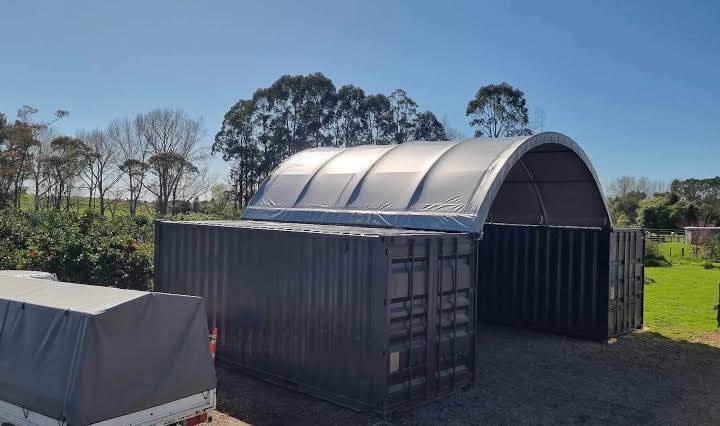
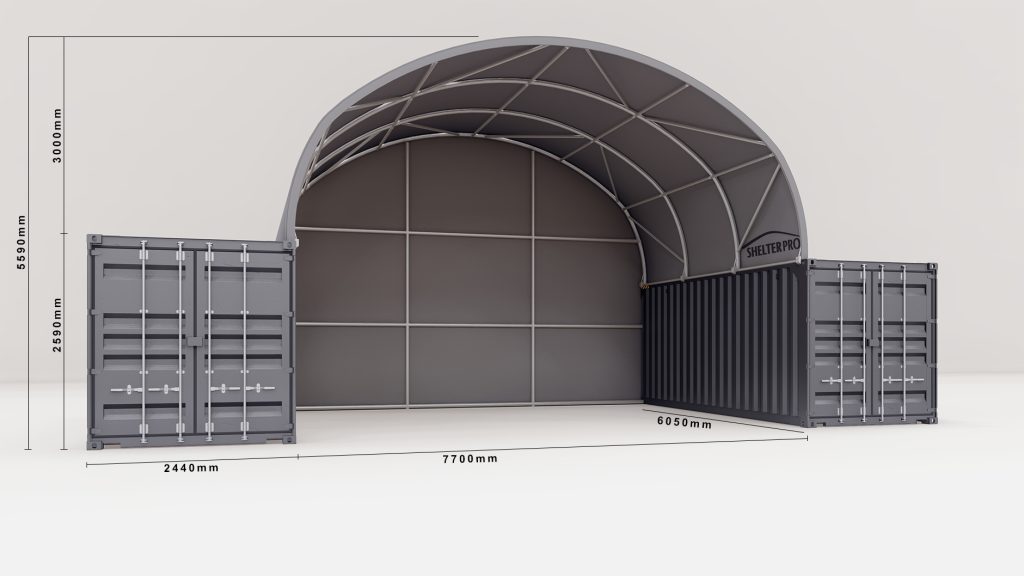
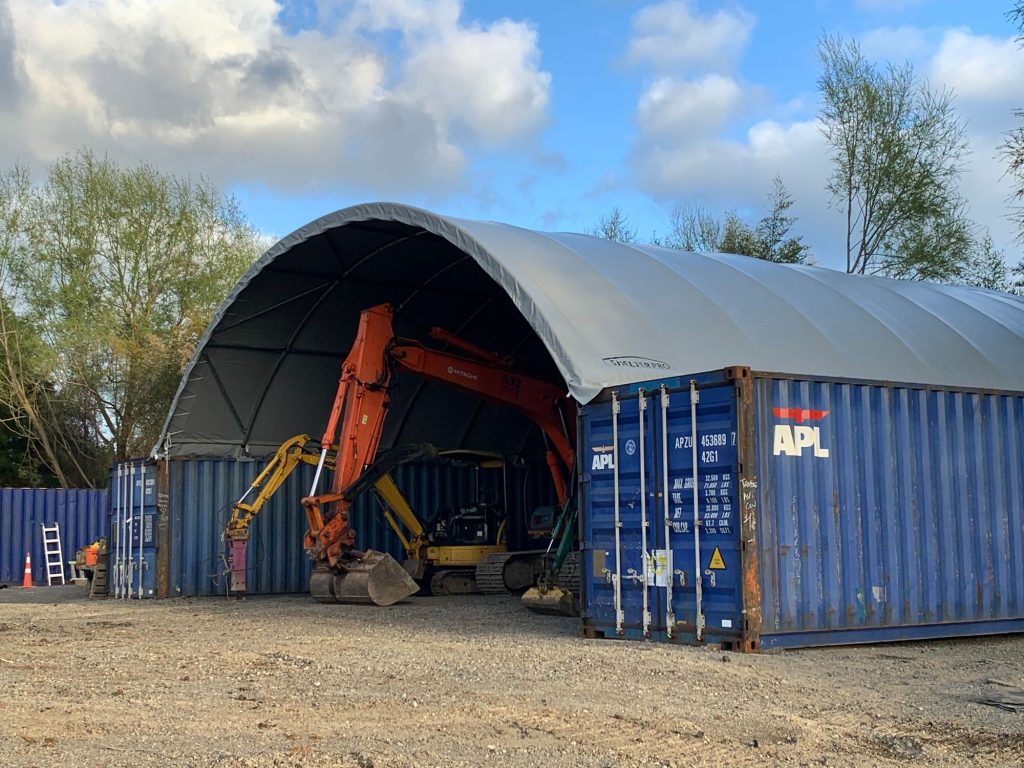
Container shelters combine two useful functions. The shipping containers themselves provide secure storage for tools, spare parts, and smaller machinery, while the span between them creates a covered area large enough for tractors and harvesting equipment.
This layout allows operators to keep essential gear protected while maintaining easy access during busy harvest periods. Tractors, headers, and attachments can be parked under cover while remaining ready for the next shift.
Unlike lightweight covers, container-based systems are designed to withstand stronger winds and rural conditions. For farms operating in exposed paddocks or open valleys, that durability makes a noticeable difference.
Where Temporary Container Shelters Make the Most Sense
Many farms already have machinery yards where tractors and harvest equipment are parked between jobs. These areas are ideal locations for temporary container shelters, particularly when multiple machines need protection at once.
Contract harvesting teams benefit especially from this approach. Equipment often moves between properties during the season, and having a shelter that can be installed quickly helps maintain machinery readiness.
Orchards, cropping farms, and rural service contractors also rely on temporary shelters to protect sprayers, harvesters, and tractors when they are not actively in use.
Protecting Machinery Between Seasons
Machinery may work hardest during harvest, but the months between seasons can be just as important for long-term equipment care. Equipment left outdoors through winter or off-season periods often deteriorates quietly.
Covered storage helps slow this process. As discussed in our article on extending the lifespan of heavy vehicles, long-term exposure to weather gradually affects paintwork, mechanical components, and electrical systems. Agricultural machinery faces many of the same conditions.
Providing shelter during these quieter months helps ensure tractors and harvest equipment are ready when the next season begins.
Things to Consider Before Installing a Temporary Shelter
Before installing a shelter, it is important to consider the size and layout required. Tractor height, implement width, and turning space all influence how the shelter should be positioned.
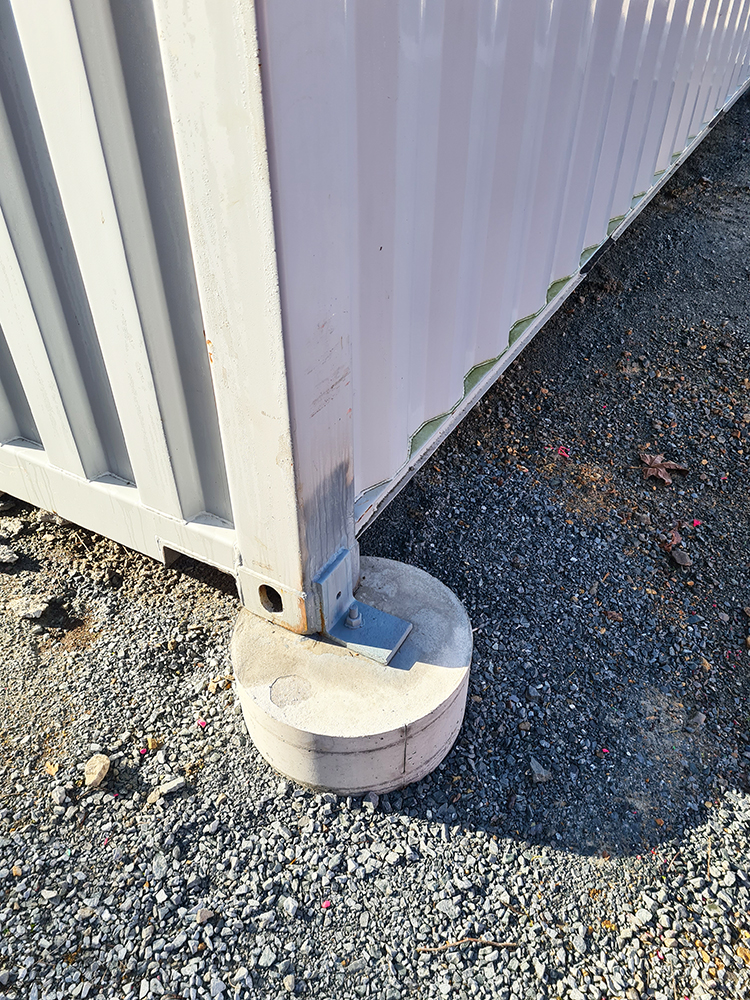
Wind exposure is another factor, particularly on open farmland or elevated ground. Proper anchoring and placement help ensure the structure performs reliably through changing conditions.
Farmers evaluating storage options often find it useful to review broader planning considerations. Our vehicle shelter guide outlines the main factors operators usually assess before installing covered machinery storage.
When these details are addressed early, temporary container shelters become a dependable part of farm infrastructure rather than a short-term workaround.
Conclusion
For many New Zealand farms, tractors and harvest equipment represent some of the most valuable assets on site. Protecting them does not always require large permanent buildings. Sometimes a flexible shelter that can adapt with changing operations is the more practical choice.
By providing reliable weather protection, temporary container shelters help extend equipment lifespan, reduce maintenance costs, and keep machinery ready for the next job. Farmers and contractors looking for practical storage solutions often begin that conversation with ShelterPro, particularly when they want shelters built to suit real working conditions.