The wrong foundation choice can turn a rock-solid shelter into a liability the moment a serious storm rolls through, and in New Zealand, those storms have a way of arriving when you least expect them. Whether you are protecting farm gear on the Waikato plains, covering aggregate on a coastal supply yard, or building out a semi-permanent workshop for your crew, the way your container shelter is anchored to the ground will determine how well it performs when conditions get rough.
At ShelterPro, New Zealand’s specialists in heavy-duty container shelters engineered for very high wind zones nationwide, we have helped hundreds of property owners and businesses across the country make this decision confidently. If you are trying to get your head around your container shelter foundation options before pulling the trigger on a setup, read on because this guide is exactly what you need. And when you are ready to talk specifics, our team is just a call or message away.
Why Getting the Foundation Right Is Non-Negotiable
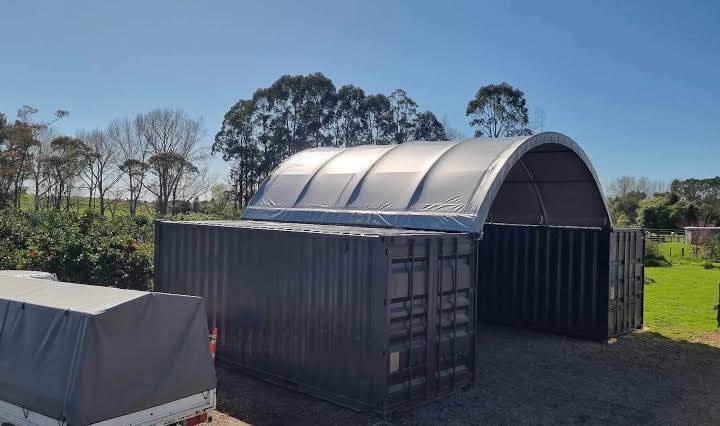
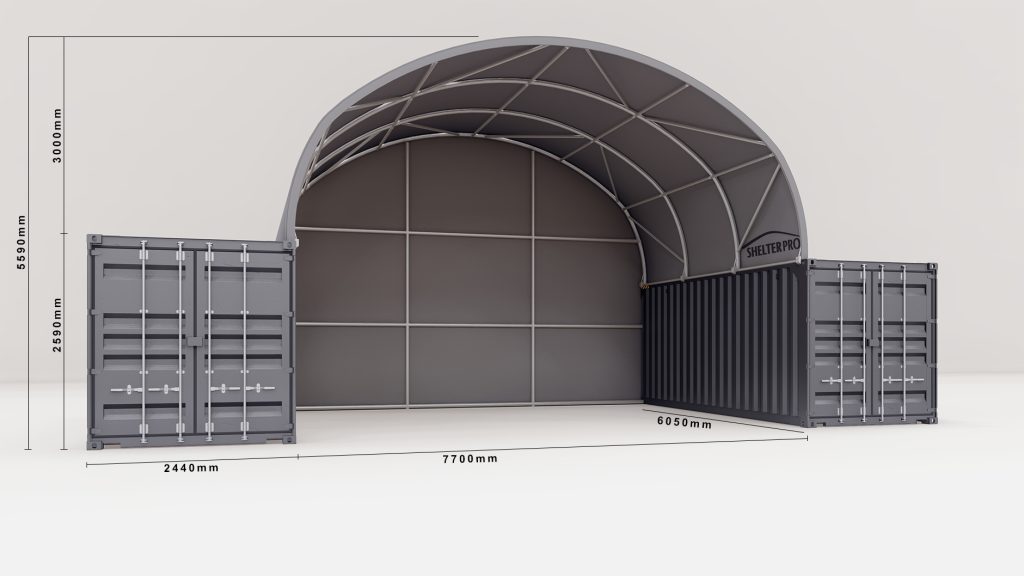
A container shelter works by spanning a waterproof canopy between two shipping containers, which means those containers are not just convenient bases; they are structural components of the whole system. The shelter arches bolt directly to base plates welded onto the container tops, and every load the canopy sees in a windstorm, from horizontal pressure pushing against the sides to upward lift pulling at the cover, passes straight down through those connections and into the containers themselves.
If the containers move, shift, or rock, the integrity of the entire frame is compromised. So before a single arch goes up, the question of how those containers are going to stay put needs a proper answer.
New Zealand’s wind environment makes this even more important than it might seem on paper. From the exposed hilltops of Hawke’s Bay to the notoriously blustery Manawatu Gorge corridor, from Wellington’s famous southerlies to the open coastlines of Northland, this country puts structures through their paces. Our shelters are engineered specifically to handle those conditions, and the foundation system you choose plays a direct role in whether that engineering does its job.
Option One: Ballast
Ballast is the simpler of the two main approaches, and in many situations, it is also the smarter one. The principle is straightforward: heavy shipping containers sitting on firm, level ground generate enough mass to resist the forces that wind and weather apply to the shelter above them. No digging, no concrete, no curing time. You position the containers correctly, level them up, install the shelter framework, and you are operational.
The real advantage of ballast is what it gives you after the shelter is up: the ability to move. Construction companies working from one project to the next, contractors who need covered workspace on a fixed-term contract, and businesses that want the option to reconfigure their yard without writing off a foundation investment all find ballast setups genuinely liberating. There is no sunk cost in the ground, and when the job is done, or your needs change, the whole setup relocates with you.
It also makes ballast a natural fit for our hire and lease arrangements, where the shelter is a short to medium-term asset rather than a permanent installation. Getting a ballast setup operational is fast, the cost stays out of your CAPEX, and the flexibility is hard to match.
That said, ballast has its limits, and it is important to be clear-eyed about them. The ground beneath your containers matters enormously. Firm, compacted gravel or hardstand is ideal. Soft soil, waterlogged paddocks, or sites with significant slope create problems because the containers can shift or settle unevenly over time, putting stress on the shelter frame in ways it was not designed to handle. In areas with particularly demanding wind exposure, especially coastal and high-elevation sites, the sheer mass of the containers may also need to be supplemented with additional securing measures to meet the wind loads your site produces.
Option Two: Concrete Footings
Concrete footings move the equation from mass-based stability to ground-anchored stability. Instead of relying on the weight of the containers to hold everything in place, you are creating a fixed mechanical connection between the containers and the earth beneath them, one that resists not just downward load but lateral push and upward lift simultaneously.
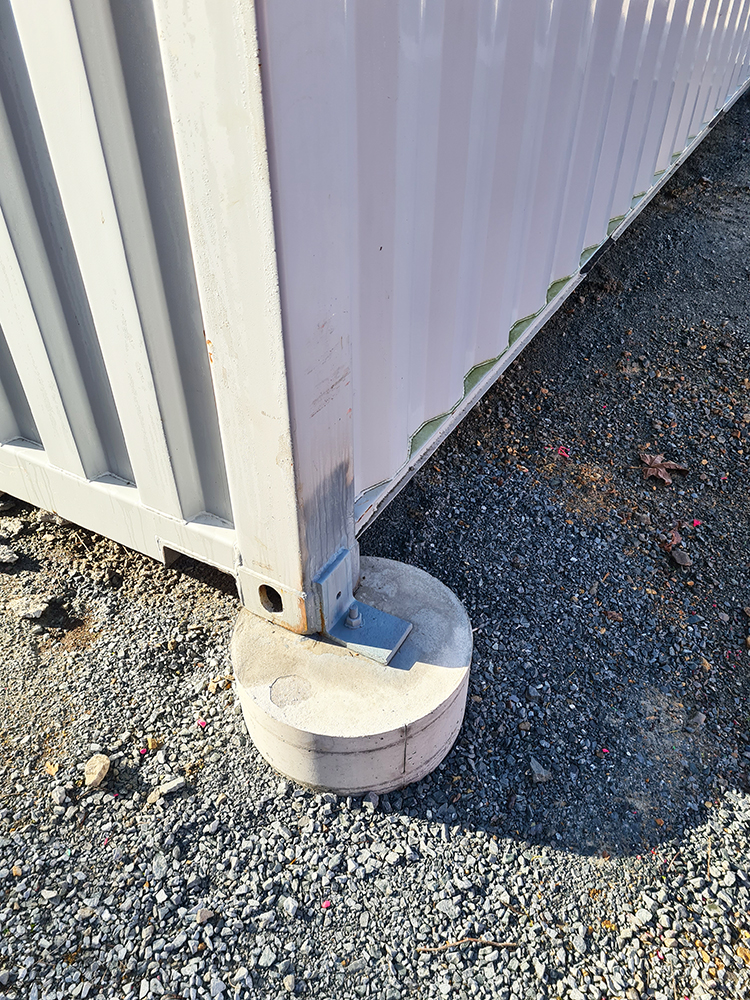
The most common approach involves pouring reinforced concrete pads at the container positions before placement. The containers are then lowered onto those pads and secured using brackets or hold-down systems that anchor into the concrete. The result is a setup that effectively becomes part of the ground it sits on, which is exactly what you want in areas where wind loading is a serious concern.
Reinforcing the concrete with rebar or mesh significantly increases the footing’s capacity to handle the shear and tension forces that a large canopy structure generates in a storm. Some installations also incorporate high-tensile threaded rods cast into the concrete, which pass through the container’s corner castings or bracket system to create a particularly robust connection point. This kind of detail matters in exposed locations where you are genuinely asking the foundation to work hard.
The trade-off is obvious and worth being honest about: concrete footings are a permanent commitment. Once the pads are poured and the containers are fixed, relocating the shelter is a much more involved undertaking. The groundworks also require planning, time for the concrete to cure properly, and usually a degree of site preparation that adds to the overall project timeline and upfront cost.
For the right application, though, none of that is a drawback. A long-term workshop, a fixed aggregate storage cover, a permanent farm storage solution, these are exactly the situations where concrete footings pay for themselves many times over in stability and peace of mind. You put it in once, you do it properly, and you stop thinking about it.
Option Three: Concrete Piers
It is worth mentioning piers separately because they offer something slightly different from standard flat footings, and they come into their own on specific site types. Where a traditional footing creates a broad horizontal pad, a pier involves drilling a vertical hole into the ground, filling it with reinforced concrete, and casting a threaded rod or bracket system into the top that the container can be anchored to.
The advantage of piers is that they can reach down past poor surface soil to find more stable ground below. On sites where the top layer is soft, sandy, or prone to movement, piers let you essentially skip past it and anchor into something more reliable. They also generate excellent uplift resistance because the concrete column is keyed into the surrounding earth across its full depth, making it significantly harder for wind forces to pull the anchor out of the ground.
Piers are particularly relevant in coastal New Zealand locations where sandy or loose soils are common near the surface, and where wind exposure can be intense. The additional engineering involved means piers are generally a job for a professional installer, but the result is a foundation system that handles demanding conditions with real confidence.
Choosing the Right Approach for Your Site
With three genuine options on the table, the decision comes down to a handful of practical questions that are worth thinking through carefully before committing to anything.
How long is the shelter going to stay in this location?
If the answer is years rather than months, and you are not anticipating any need to relocate, concrete footings or piers make sense. If portability is part of the value you need from your shelter, ballast is the way to go.
What are the ground conditions like?
Hard, compacted, and level means ballast will perform well. Soft, uneven, or prone to saturation means you need something that goes into the ground rather than sitting on top of it.
How exposed is the site?
New Zealand has a wide range of wind zones, and where your site falls within that range matters. A sheltered valley location on firm ground is a very different proposition from an open coastal site or a ridge-top farm. Our shelters are purpose-built to handle demanding New Zealand wind conditions, but the foundation still needs to match the demands of wherever you are placing it.
Is there a consent or compliance consideration?
Permanent concrete foundations sometimes bring building consent requirements depending on your local council, the scale of the structure, and how it is classified. It is worth checking with your local authority before committing to a foundation type, particularly for larger installations.
Our installation process page covers how containers need to be positioned squarely on firm, level ground before any framework goes up, and the principle holds regardless of which anchoring approach you take. Getting the base right at the start is always cheaper than correcting it later.
A Word on Hybrid Approaches
For sites that do not fit neatly into one category, a hybrid approach can be the most practical solution. Concrete pads poured under the container corners for levelling and stability, combined with a non-permanent bracket system that allows the container to be unbolted and lifted if needed later, gives you much of the stability benefit of concrete while preserving some degree of relocatability.
This is a common solution on sites with variable ground conditions where full ballast is risky but full permanence is also undesirable. It takes a bit more thought to plan correctly, but it is absolutely achievable, and it is the kind of detail that our team is well placed to help you work through.
What ShelterPro Recommends
We do not apply a one-size-fits-all answer to the foundation question because New Zealand sites are too varied for that kind of blanket advice. What we do is take the time to understand your site, your intended use, your ground conditions, and how long you need the shelter in place, and then give you an honest recommendation based on that picture.
What we can say with confidence is that the foundation decision is not one to gloss over. The shelter itself is engineered to perform, and it will do so beautifully when it is sitting on a foundation that matches the demands of your location. Cut corners on the ground preparation or anchoring, and even the best-built shelter is working against itself.Browse our full shelter range to get a feel for which model suits your setup, take a look at some of our recent installations across New Zealand to see how different foundation approaches look in practice, and when you are ready to talk through your specific situation, get in touch with the ShelterPro team. We will make sure you get the foundation right from day one.